Home › Blog › Homes, Complexes and Business
Communal DStv for Rondebosch Flats and Student Digs
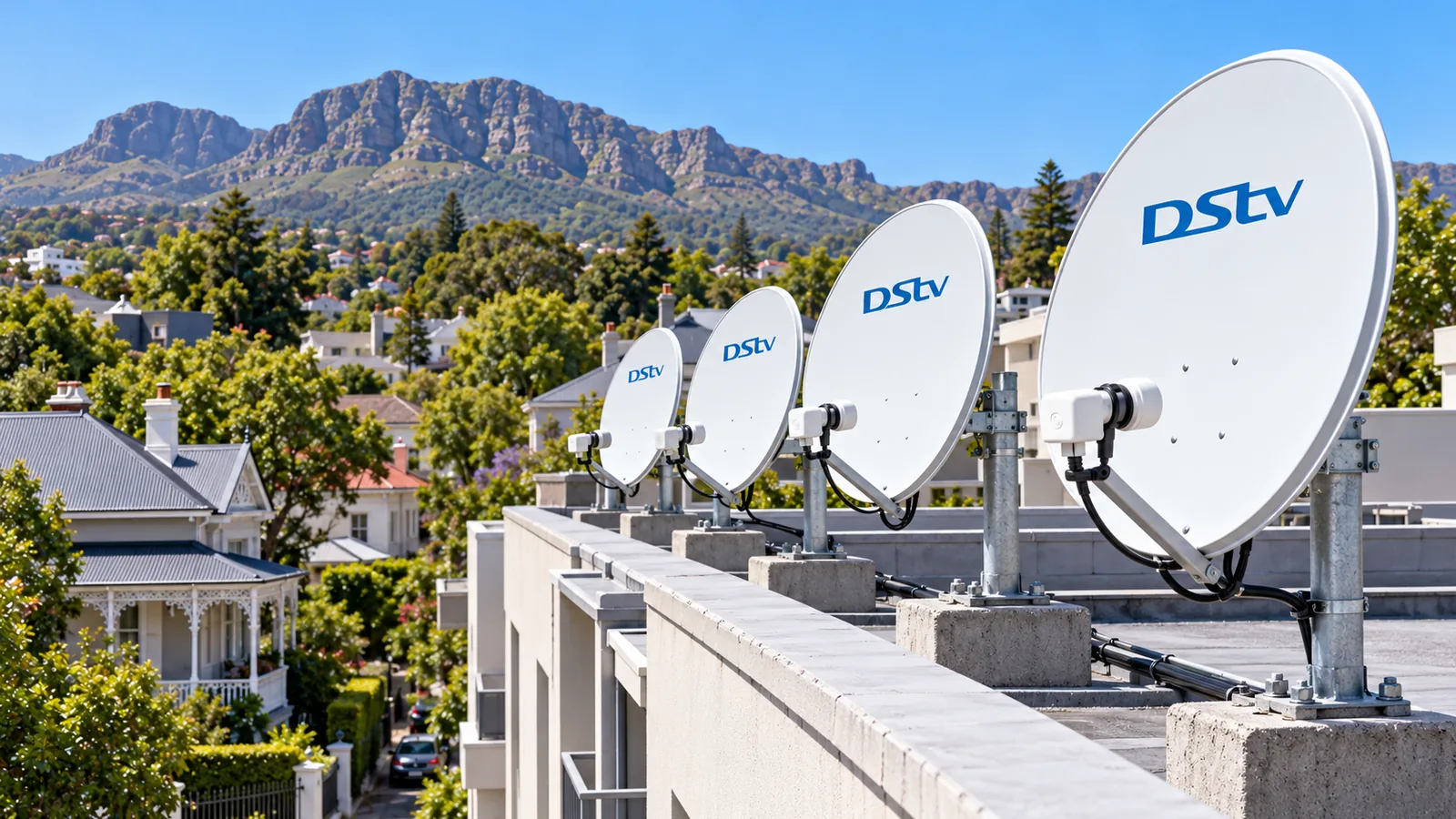
Walk down almost any street near Main Road and you will see it: one block of flats with a single neat dish on the roof, and the next with a dozen dishes bolted to the balconies. The first building has communal DStv. For trustees, landlords of student digs and owners of small blocks in Rondebosch, it is usually the tidier and safer way to give everyone a picture.
Quick answer
Communal DStv is one shared dish system that feeds every flat or room in a building through a multiswitch and cabling to each unit. Each tenant still pays for their own subscription and decoder. It removes clutter from the walls, cuts roof damage, and lets the building control access. It suits blocks of flats, student houses, guesthouses and offices.
Is Communal DStv Right for Your Rondebosch Building?
We get this question from three kinds of people. Trustees whose facade is covered in old dishes. Landlords who turned a big Edwardian house into student rooms. And guesthouse owners who need a TV in every room without a dish for each one.
- Blocks of flats: one system serves every unit, and new tenants just plug in.
- Student houses near UCT: each room gets a wall point, so students bring a decoder or use the shared one.
- Guesthouses and B&Bs: one or more decoders feed several rooms at once.
- Offices and waiting rooms: one picture on several screens, managed from one cupboard.
If your building has fewer than three TV points, individual dishes may still make sense. Above that, a shared system almost always wins on looks, maintenance and roof damage. Our communal DStv systems service starts with a free look at the roof and the number of units.
There is also a heritage angle. Many Rondebosch streets have Victorian and Edwardian rooflines that owners and neighbours care about. Clearing a cluster of old dishes off a front gable is often the single biggest visual improvement a body corporate can make for the money.
How a Communal DStv Installation Works
Think of it like the plumbing for your TV signal. One or two large dishes sit on the roof. Their LNBs feed a multiswitch, a box that splits the signal so every unit can choose its own channel. From there, a separate cable runs to a wall point in each flat or room.
- We survey the roof for a clear line of sight towards the north-east.
- We size the dish and pick a multiswitch with enough outputs, plus a few spares.
- We plan cable routes through ducts, roof spaces or neat trunking.
- We fit wall plates in every unit and label each cable at the switch.
- We test the signal at every point and hand over a simple layout sheet.
The result is one communal DStv installation that can handle many decoders at once. Each resident's decoder still has its own smartcard and its own account. The building owns the wiring; the tenant owns their subscription.
Good to know
Smart LNBs, used for Explora decoders on single homes, are not generally suitable for shared systems. In a block, Explora owners connect through the multiswitch instead. Ask us before you buy an LNB for a flat.
DStv Installation for Complexes in Rondebosch: Costs
Every building is different, so we price DStv installation for complexes after a site visit. Older Rondebosch blocks with thick walls and no ducting take more time than a newer complex with conduit already in place.
| Cost factor | Lower cost | Higher cost |
|---|---|---|
| Number of units | A small block or house of rooms | A large block over several floors |
| Cable routes | Existing ducts or conduit | New trunking through heritage walls |
| Roof access | Flat concrete roof with a hatch | Pitched tiled or slate roof |
| Old equipment | Clean roof | Many old dishes to remove |
| Extras | TV points only | CCTV and WiFi on the same project |
For a sense of single-home labour rates, our page on DStv installation cost in Rondebosch sets out typical ranges. For whole buildings we always quote first, in writing, so trustees can take a clear number to the next meeting.
It also helps to think about who pays. In most blocks the body corporate pays for the communal DStv installation from its levy fund, because the roof and wiring are common property. Some landlords of student houses add it as a once-off improvement and recover it through rent. Either way, the monthly DStv subscription stays with each resident.
Need DStv installers in Rondebosch?
Tell us what you need or what your screen is showing. We give you a clear price before we drive out.
DStv Flats in Rondebosch: Tenants, Trustees and Two TVs
Most DStv flats Rondebosch residents live in fall under a body corporate or a managing agent. The rules matter. Many buildings ban new dishes on the facade, and some insist that tenants use the shared system only.
- Check the conduct rules before buying a dish.
- Ask the caretaker which wall point in the unit is live.
- Report faults to the managing agent, since the roof kit is common property.
- Keep your own decoder and account; they move with you.
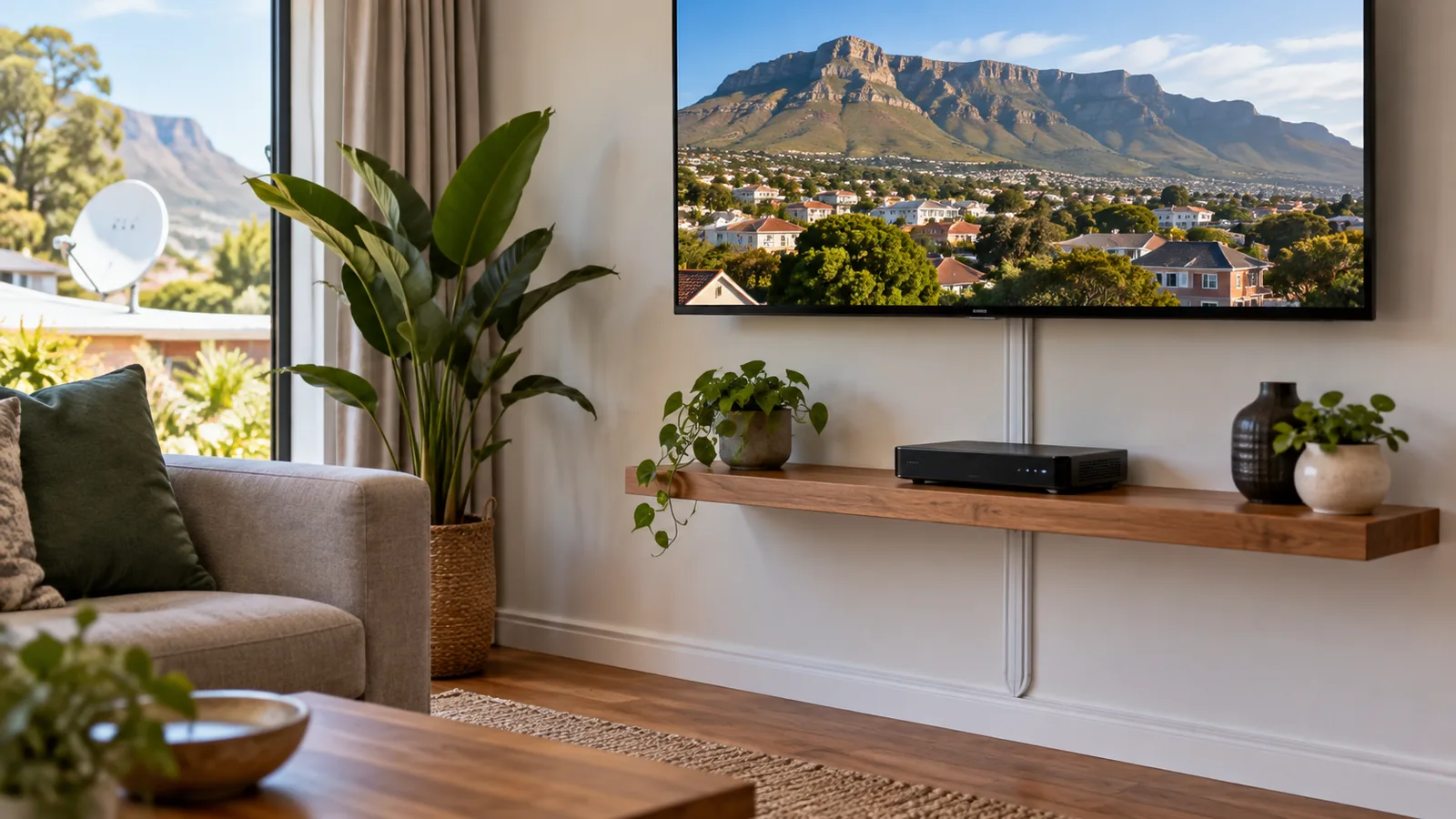
The good news for DStv flats Rondebosch tenants is that a well-built shared system makes moving in simple: plug the decoder into the live wall point and scan.
Families in larger flats often want two TVs. XtraView works on many shared systems, and our guide to DStv dual view versus XtraView covers the options. Moving to another unit in the same building, or out of it altogether, is covered in our DStv relocation checklist for Rondebosch.
The DStv Cable Connection, Explained Simply
A lot of signal faults in old buildings come down to the cable, not the dish. A DStv cable connection is a coaxial cable with an F-connector screwed on each end. Simple, but easy to get wrong.
- Coax cable: carries the signal from the LNB or multiswitch to the wall point.
- F-connectors: must be fitted tightly, with no loose braid touching the centre pin.
- Wall plates: give a neat, fixed DStv cable connection in each room.
- Splitters: send one decoder's picture to several TVs, all on the same channel.
In wet Cape winters, water gets into poorly sealed outdoor connectors and slowly corrodes them. That is why we weatherproof every joint outside and check old ones whenever we service a building.
Technician tip
If only one flat in a block loses signal, the problem is usually that unit's cable or wall plate. If every flat loses signal together, look at the dish, LNB or multiswitch on the roof.
Communal DStv for Rondebosch Guesthouses and Businesses
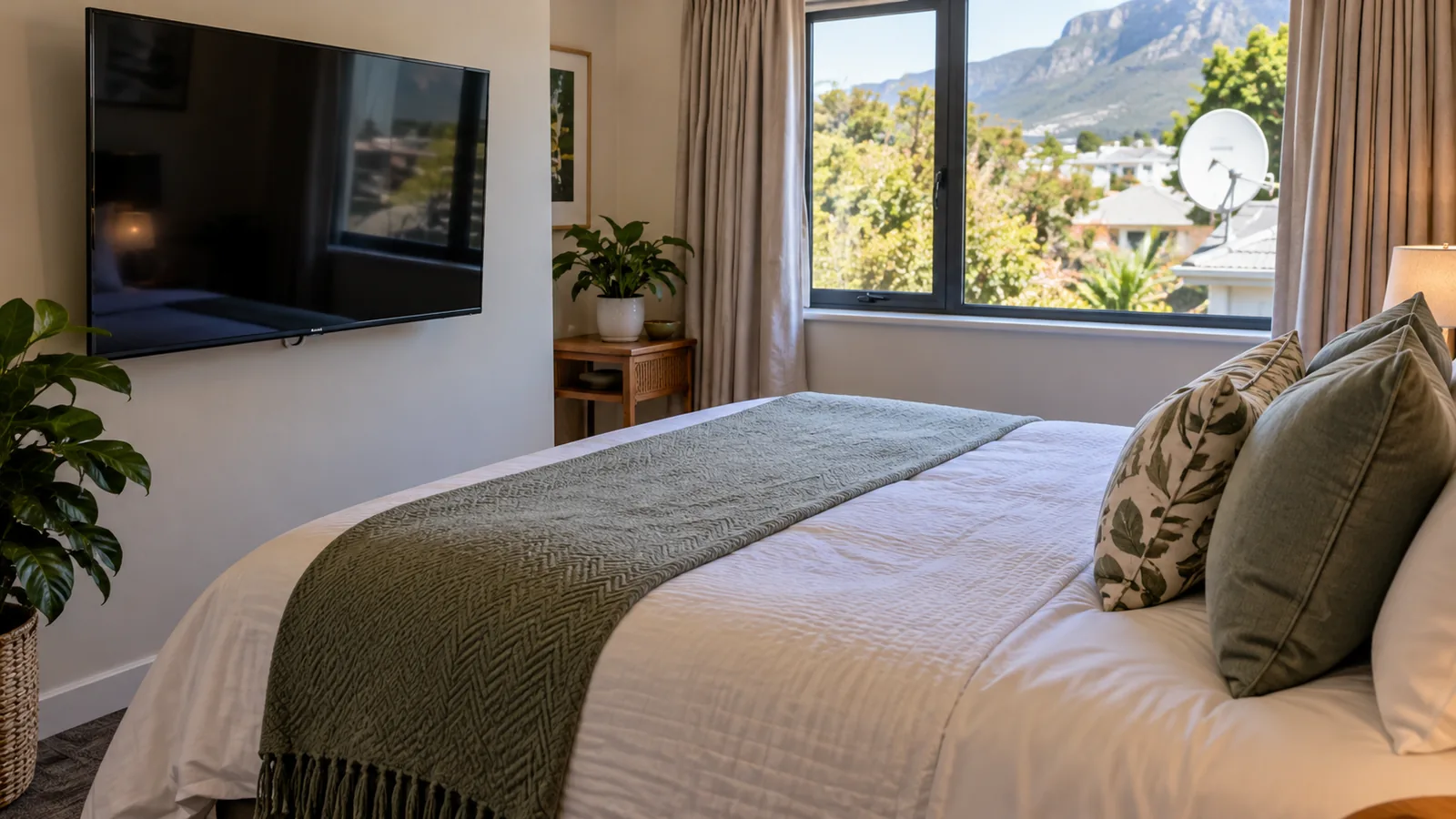
Guesthouses in Rondebosch and Newlands host parents for graduation, cricket fans and visiting academics. Guests expect a TV that works first time. A commercial setup lets you run one or more decoders from a cupboard and send channels to each room.
Restaurants, pubs and gyms need a commercial subscription to show DStv to the public. Our commercial DStv installations cover the wiring, and DStv explains business viewing on dstv.com.
TV wall mounting and cable management
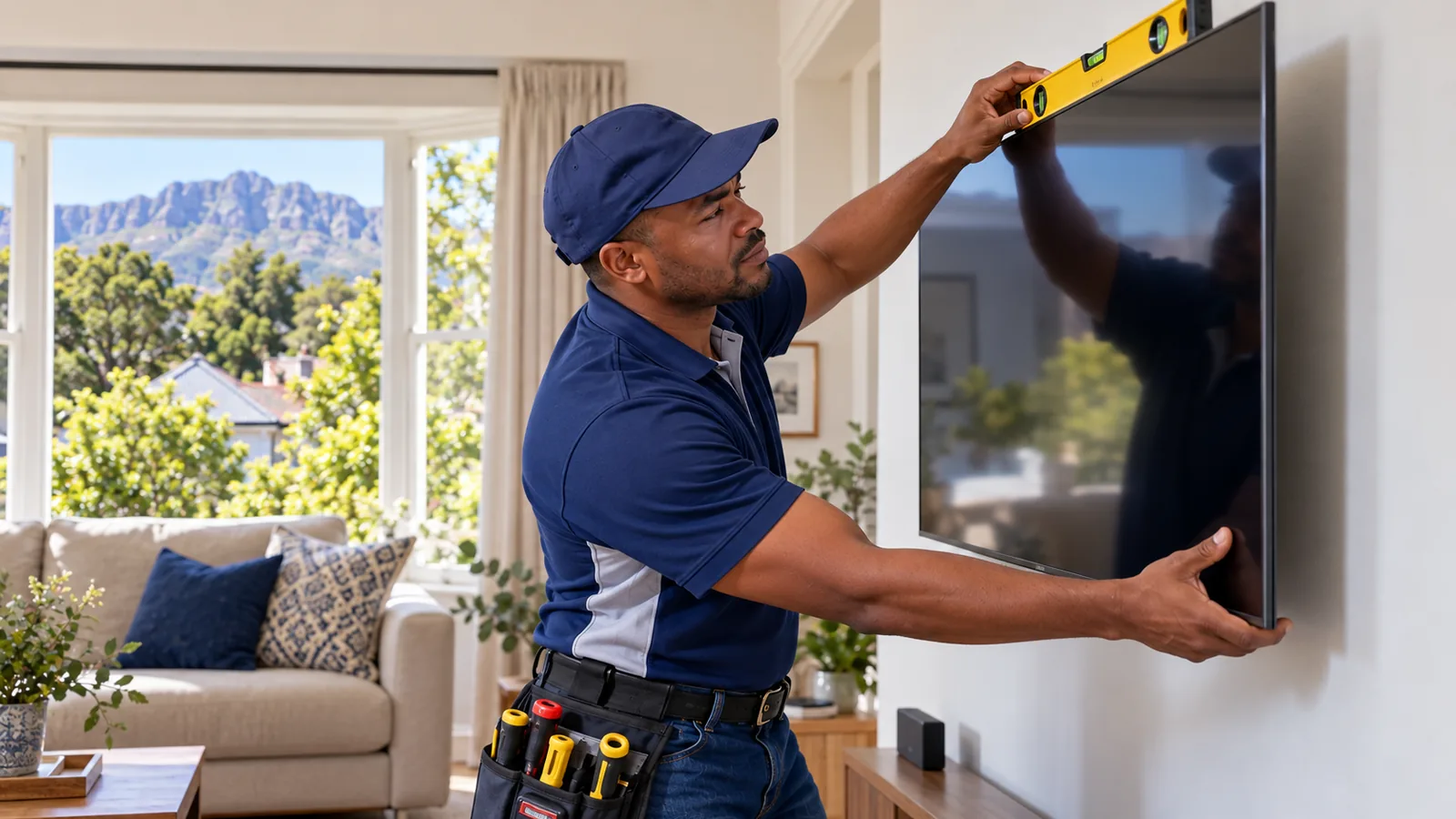
A TV on a wall bracket, with the cables hidden in trunking and the decoder on a floating shelf, looks better and lasts longer in a busy room. Our TV wall mounting service in Rondebosch uses the right anchors for brick, plaster or drywall.
Safety first
Roof work on a block of flats is work at height. Access hatches, parapets and old roof sheets can all be hazards. Keep tenants off the roof and make sure anyone working there is using proper ladders and fall protection.
Aerial, CCTV and WiFi on a Communal DStv Project
While the cable routes are open, it makes sense to plan everything else at once. A TV aerial picks up free terrestrial channels, while a satellite dish carries DStv and OpenView. Some buildings run both through the same distribution.
- CCTV: cameras at the gate, bin area and parking, recorded on one system.
- WiFi: access points in passages for student houses and guesthouses.
- Aerial: a fallback for basic channels if a resident has no decoder.
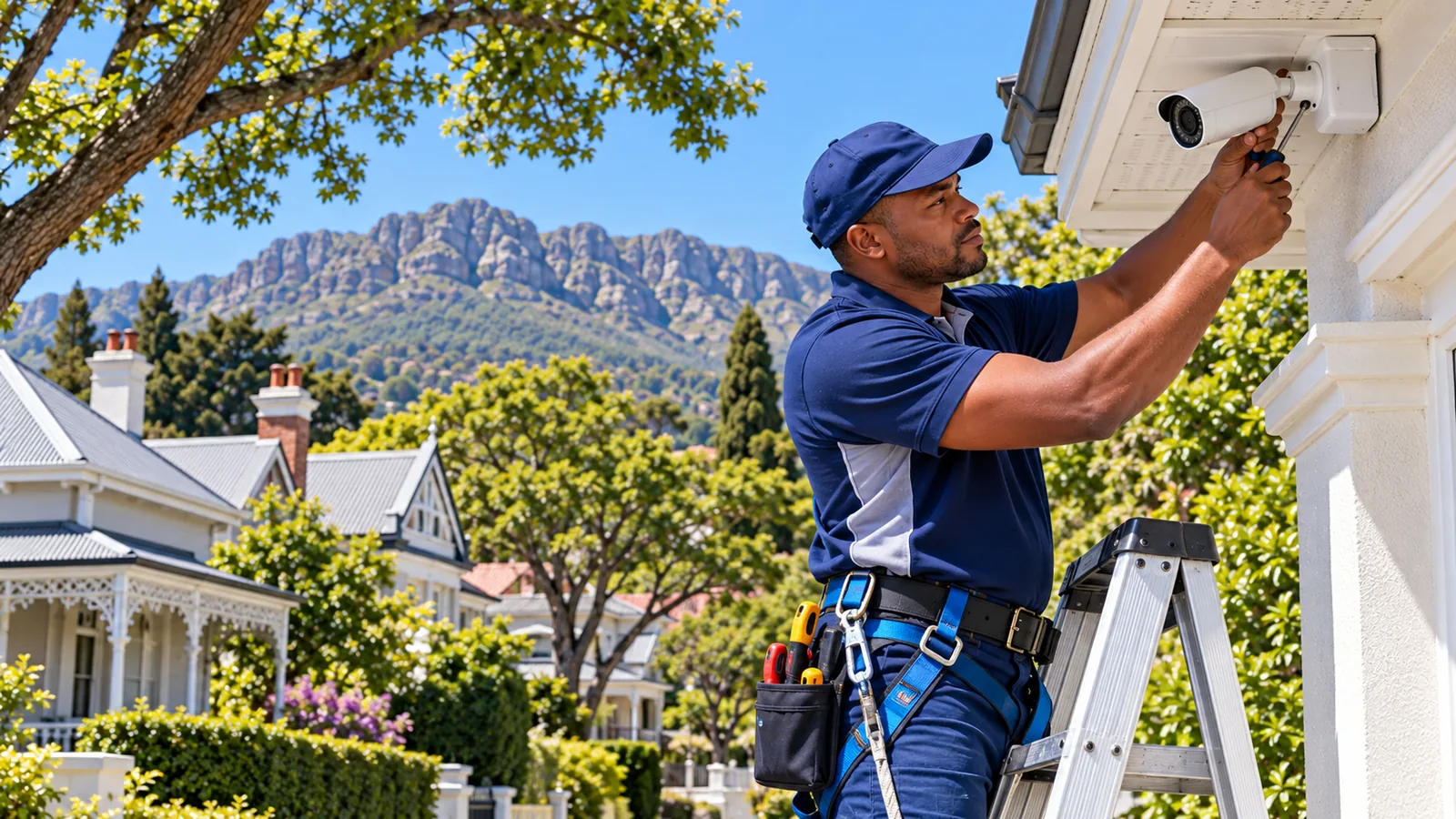
Doing it in one project means one set of holes, one lot of trunking and one contractor to call when something goes wrong.
How Often to Service Communal DStv in Rondebosch
A shared system works hard. We suggest a check-up once a year, ideally before winter. The south-easter off Devil's Peak can nudge a large dish over time, and heavy rain finds every badly sealed connector.
- Dish alignment and mounting bolts.
- LNB and multiswitch condition.
- Outdoor connectors and weatherproofing.
- Signal levels at a sample of wall points.
Plan Your Communal DStv System in Rondebosch
We design and install shared systems for flats, student houses and guesthouses across Rondebosch, Mowbray, Rosebank, Claremont and Observatory. Ask our communal DStv installers in Rondebosch for a site visit, or request a building quote with your number of units and we will come back to you with a plan.
communal DStv in Rondebosch: FAQs
What is communal DStv?
Communal DStv is a shared satellite system for a building. One or two dishes on the roof feed a multiswitch, which sends signal to a wall point in each flat or room. Every resident still uses their own decoder and pays their own subscription, but the building has one tidy dish instead of many.
How much does a communal DStv installation cost in Rondebosch?
It depends on the number of units, the cable routes, roof access and whether old dishes need removing. A small house of student rooms costs far less than a multi-storey block. We visit the building and give a written quote before any work starts.
Can I put my own dish on a block of flats in Rondebosch?
Only if the body corporate or landlord allows it. Many Rondebosch buildings ban new dishes on the outside walls and require residents to use the communal DStv system. Check the conduct rules and ask the managing agent first.
Does communal DStv work with an Explora?
Yes, through the multiswitch. Explora decoders on a shared system connect to the building's outputs rather than a Smart LNB of their own. The installer sets up the right connections so each tuner gets signal. Ask before buying hardware for a flat.
Who fixes communal DStv when it stops working?
The roof dish, multiswitch and shared cabling are usually common property, so the body corporate or landlord arranges repairs. If only your unit has no signal, the problem may be your wall plate or cable, and the managing agent will tell you who pays.
How often should a communal DStv system be serviced?
Once a year is a sensible minimum, ideally before winter. A service checks dish alignment, mounting bolts, the multiswitch, outdoor connectors and signal at a sample of wall points. Buildings exposed to strong wind may need checks more often.
Talk to our Rondebosch team
Call or WhatsApp us for a quote. We answer quickly and we always price the job before we arrive.