A new DSTV installation is the job that decides how the system behaves for the next five years. Most of the faults we are called out to in Rondebosch are not equipment failures at all. They are shortcuts taken on the original install: a bracket fixed into plaster instead of brick, a connector pushed on rather than compressed, or a dish aimed by watching the picture instead of reading a meter.
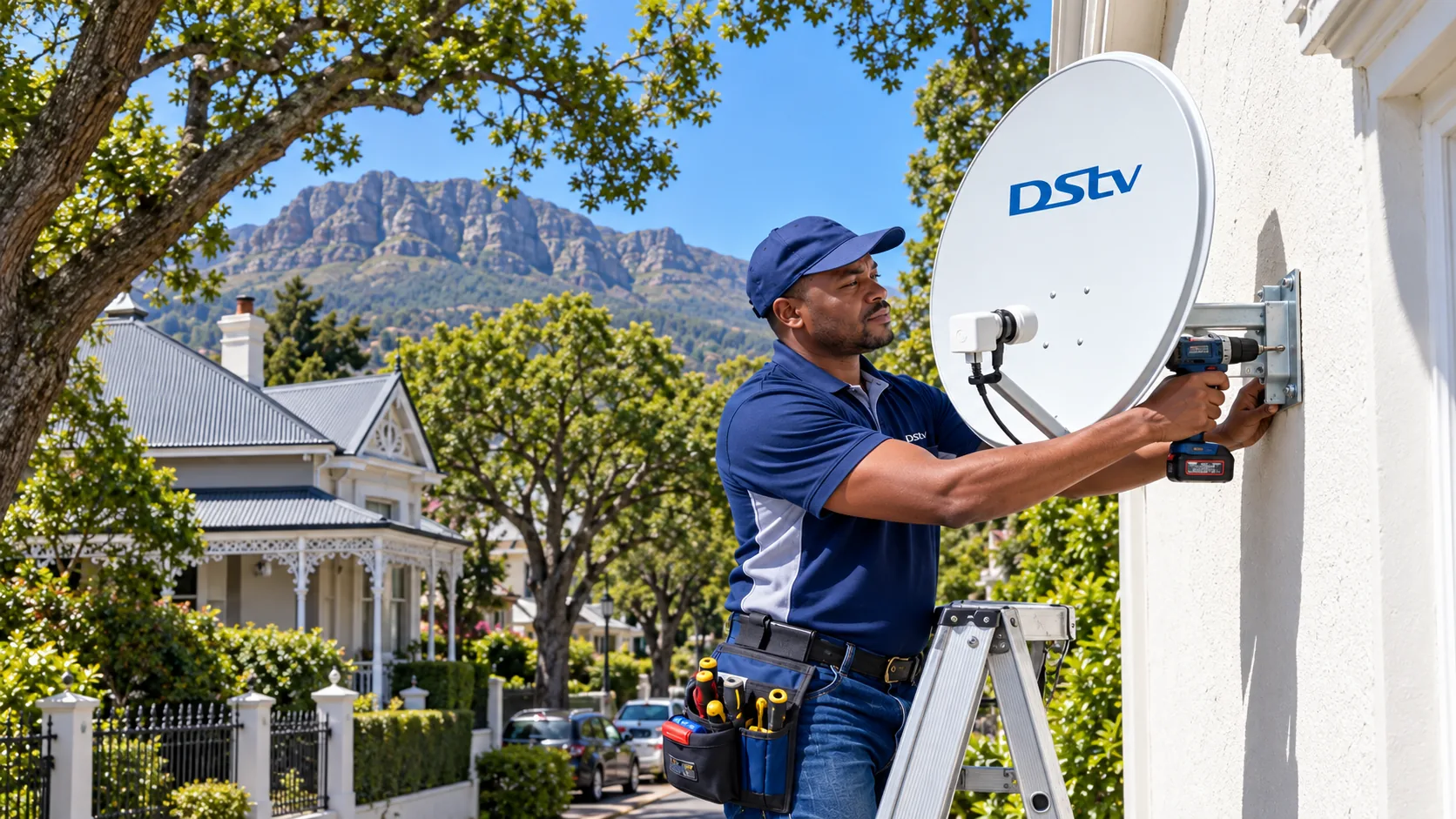
We install the whole system in one visit. That means choosing a mounting position with a clear line of sight to the satellite, fixing the bracket into solid structure, running the coax where you will not see it, fitting the LNB, peaking the dish on a signal meter and then activating and tuning the decoder on every television in the house.
- Site check and line of sight assessment before anything is drilled
- Bracket bolted into solid brick or structure, never loose plaster alone
- Dish peaked on a signal meter with margin left for rain and wind
- Compression F connectors fitted with the correct tool and sealed outside
- Decoder activated, tuned and tested on every TV point
How we do it
New DSTV Installation in Rondebosch, done properly
Choosing where the dish goes
Rondebosch has a lot of mature oak and plane trees, and the older properties around Rosebank and Mowbray have them right over the roof. A tree that is clear in winter can block the signal completely once it leafs out in spring, which is why a dish that worked in July starts dropping out in October. We look at the growth above the mounting point, not only the view on the day, and we will suggest a different wall or a short mast if the obvious spot is going to cause trouble later.
Cabling that stays out of the way
Cable is clipped at regular spacing with a drip loop before it enters the wall, so rain runs off rather than tracking down into the LNB or through the penetration. Wall penetrations are drilled at a downward angle and sealed on the outside face. Where you want the decoder on a different wall to the dish, we plan the run before drilling so the cable ends up in trunking or inside the wall instead of stapled across the brickwork.
What happens on the day
We confirm a window rather than a vague morning or afternoon. The installer arrives with the parts, walks the property with you, agrees the dish position and the decoder position, and only then starts work. Before we pack up, we run through the channels with you, show you the signal readings we finished on, and leave the site clean.
Common questions
New DSTV Installation in Rondebosch: your questions answered
How long does a new DSTV installation take in Rondebosch?
A standard single room installation usually takes two to three hours from arrival to final channel test. Multi room setups, difficult roof access or long cable runs through an older Rondebosch property can push it to half a day. We will tell you which one yours is when you describe the property on the phone.
Do I need to buy the dish and decoder before you come?
No. We supply and install the dish, LNB, bracket, cable and decoder as part of the job. If you already have equipment from a previous property we will happily reuse it, provided the dish is not corroded and the decoder is still supported.
Can you install DSTV in a Rondebosch flat or complex?
Yes. Many complexes already have a communal dish and a multiswitch, in which case we connect your unit to the existing system rather than adding another dish to the roof. Where there is no communal system and body corporate rules allow it, we fit an individual dish in an approved position.
Will the installation work when it rains?
A correctly peaked dish has enough signal margin to hold through normal Cape winter rain. Brief drops during an intense downpour are normal for satellite anywhere. If your picture goes out in light rain, the dish is not peaked properly or the connectors are letting water in, and that is a repair rather than a fault of the weather.
Related services
Other DSTV work we do in Rondebosch
Ready to book
Book new DSTV installation in Rondebosch
We work Monday to Saturday across Rondebosch and the suburbs around it, with emergency callouts when a business is down.